

Benjamin Schachtman
News DirectorBen Schachtman is a journalist and editor with a focus on local government accountability. He began reporting for Port City Daily in the Wilmington area in 2016 and took over as managing editor there in 2018. He’s a graduate of Rutgers College and later received his MA from NYU and his PhD from SUNY-Stony Brook, both in English Literature. He loves spending time with his wife and playing rock'n'roll very loudly. You can reach him at BSchachtman@whqr.org and find him on Twitter @Ben_Schachtman.
-
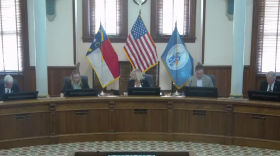 The New Hanover County Board of Commissioners’ Republican majority reappointed current Endowment directors Woody White and Mary Lyons Rouse, saying they’d seen improvements in the foundation’s grantmaking in recent years. Democratic board members asked for changes to the current appointment process for The Endowment and other major boards.
 -
 Public media is not a perfect system, but it may be the best chance for local journalists in a news ecosystem that is rapidly degrading. WHQR News Director Ben Schachtman makes the case for it in the middle of a pledge drive — when the whole thing seems a little fragile, but also urgently necessary.
 -
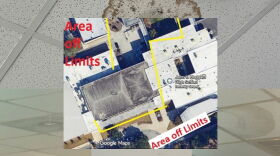 Due to a mold infestation, John T. Hoggard High School has now closed off additional parts of its campus. The New Hanover County Schools district is undertaking remediation and meeting with both staff and parents — who had been growing frustrated. The goal is to get major parts of the campus reopened by the end of September.
 -
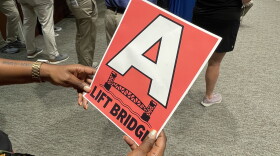 In a last-ditch effort to voice their comments and concerns in-person on the replacement of the Cape Fear Memorial Bridge, and the option to toll it, dozens of residents from New Hanover and Brunswick counties spoke up at public hearings. WHQR News Director Ben Schachtman sat down and talked with reporter Aaleah McConnell about everything that went down.
 -
 This week, Chief Zuidema held a series of one-on-one interviews with reporters to talk about his first year running Wilmington's police department. He spoke with WHQR about staffing, morale, homelessness, emerging technology, downtown crime, and youth violence.
 -
 There’s significant momentum behind the plans for a tolled replacement of the Cape Fear Memorial Bridge, which are nearing the point of no return. Serious questions remain about the plans’ impact, and some are asking if there are any alternatives. Here’s a look at how we got here and what could come next.
 -
 Slowly but surely, plans have been moving forward to replace the Cape Fear Memorial Bridge with a new, tolled bridge. As that plan becomes much closer to a reality, the unpopular toll isn't the only concern. On today's show, two Wilmington city council members share their thoughts on the process, and how things might proceed differently.
 -
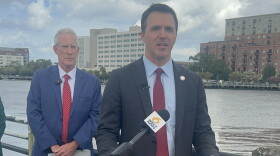 On Thursday, North Carolina officials announced a $590-million deal between the state and 11 local governments and DuPont and Chemours to resolve legal action over PFAS contamination, calling it the largest environmental damages recovery in state history. The settlement means $22.8 million for New Hanover County, but does not include Cape Fear Public Utility Authority, which is still actively suing the two chemical companies.
 -
 New Hanover County commissioners unanimously vote to cancel contract for Flock license-plate readersOn Tuesday, New Hanover County commissioners voted to end most, but not all, of its contract with Flock, citing insufficient guardrails against abuse of the powerful technology. The controversial license-plate readers and the broader use of AI-powered surveillance have prompted community pushback across party lines.
 -
 The campaign for incumbent Republican State Senator Michael Lee recently dropped an AI deepfake ad, mocking his opponent, Democrat Jessica Bichler. It’s not totally surprising, given that AI slop has made its way into almost every corner of our lives. But as some states move to regulate the practice, it’s worth unpacking some ethical, political, and even constitutional facets of AI-generated political messaging.


