

Rachel Keith
Senior Reporter/HostRachel is a graduate of UNCW's Master of Public Administration program, specializing in Urban and Regional Policy and Planning. She also received a Master of Education and two Bachelor of Arts degrees in Political Science and French Language & Literature from NC State University. She served as WHQR's News Fellow from 2017-2019. Contact her by email: rkeith@whqr.org
-
 On today's show, Rachel Keith talks to Duke University assistant professor Dr. Justin Leroy about his new book, The Lowest Freedom — Racial Capitalism and Black Thought in the Nineteenth Century. We discuss American history in the context of prominent Black authors like Wilmington’s own David Walker, along with Frederick Douglass and Ida B. Wells.
 -
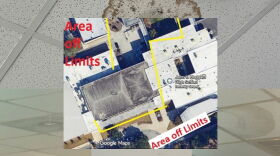 Due to a mold infestation, John T. Hoggard High School has now closed off additional parts of its campus. The New Hanover County Schools district is undertaking remediation and meeting with both staff and parents — who had been growing frustrated. The goal is to get major parts of the campus reopened by the end of September.
 -
 Earlier this month, the North Carolina Department of Public Instruction released last year’s school report card and growth scores. New Hanover County Schools improved on several metrics, including nine schools increasing a letter grade and six schools improving their growth scores. Last year, the district had ten low-performing schools; now it has only five.
 -
 Entering the latest fiscal year, the top administrators in local government got pay bumps and bonuses — though some got more than others, and one actually gave money back.
 -
On today’s show, Rachel Keith sits down with me to unpack her latest reporting on over a dozen resignations from Cape Fear Community College's nursing program. Plus, Port City Daily’s Brenna Flanagan stops by to discuss New Hanover County Schools' town hall and the latest on North Carolina’s film incentive program
-
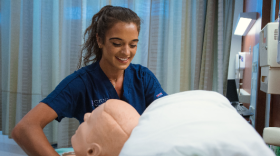 This spring, CFCC hired a consultant to review the efficiency of its nursing program, and subsequently updated its policy for how faculty meet their workload expectations. After that, over a dozen faculty members left the college, some of whom told WHQR the exodus was directly due to the policy change.
 -
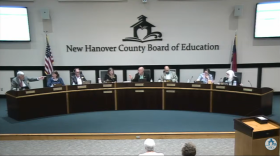 Near the start of Tuesday evening’s New Hanover County school board meeting, Libertarian member David Perry abruptly left the dais after his colleagues declined to take up his motion. Perry wanted formal adoption of raises for board members — but his colleagues felt it had already cleared the proper channels.
 -
 Last week, UNCW Swimming and Diving and the Wilmington Swim Academy finished their series of free swim lessons. The volunteer-driven program is designed to teach younger kids a crucial skill for living in a coastal community.
 -
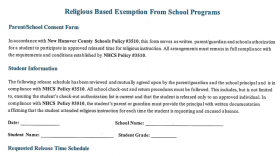 At Tuesday’s agenda review meeting, the New Hanover County school board debated the form they’ll use to excuse students for off-campus religious-based education. At their upcoming meeting, they’ll look at policy changes to public records requests — some of which, as currently proposed, appear contrary to open records law.
 -
 Back in February, the City of Wilmington’s Board of Adjustment voted unanimously to grant a variance so that the developers of the Wilmington Housing Authority’s Hillcrest community could cut down six live oaks, some of which are over a hundred years old; however, some in the community are still campaigning to save them since shovels haven’t hit the ground yet.


