

Rhonda Waterhouse
Freelance WriterRhonda Waterhouse holds an MFA in Creative Nonfiction with an environmental writing focus from UNC Wilmington and an MEd from Penn State University. Her work has appeared in Black Warrior Review, American Submariner, Coastal Review, and storySouth, among others. She is currently writing a memoir about brain injury and the healing power of trees. She writes about science, disability, family, and nature. With their five children now grown, Rhonda, her partner, and their dog greet the sunrise on Wrightsville Beach.
-
 On Thursday, New Hanover County Manager Chris Coudriet issued an administrative denial of Charlotte-based Copper Builders’ plans to build a 1,800-unit development in Sledge Forest. The decision, which didn’t involve a vote by elected officials, was based on the developer's plan to provide only one road access point.
 -
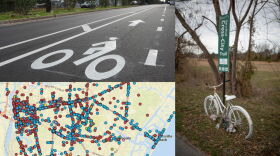 Launched in Scandinavia thirty years ago, Vision Zero is an ambitious program to eliminate traffic-related deaths of pedestrians and bicyclists. Numerous U.S. cities later joined, but many have struggled to meet their goals. Now, Wilmington is implementing its own Vision Zero program.
 -
 More than sixty people turned up for Tuesday’s Martin Marietta mining expansion hearing with the Department of Environmental Quality (DEQ) Division of Water Resources. Many were critical of the proposal, which advocates say would pose environmental and stormwater issues, along with other concerns.
 -
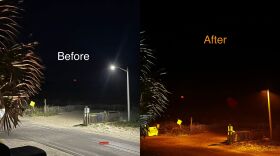 The Ocean Isle Beach Sea Turtle Protection Organization, a Brunswick County nonprofit, is funding the installation of 'turtle safe' lighting — part of a larger effort to help protect turtle hatchlings from misdirection and predators as they head from the beach to the ocean.
 -
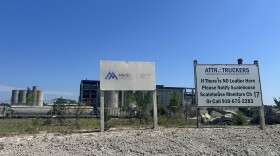 There's a public hearing next week for a proposed quarry expansion in northern New Hanover County. Residents and experts have voiced concerns about the environmental and stormwater impacts.
 -
 Recently, the North Carolina Department of Environmental Quality, NCDEQ, issued a warning for people and their pets to avoid contact with discolored water that may contain dangerous algae. Those risks are more pronounced in warmer weather.
 -
 Over the last half-century, the black bear population has made a strong recovery, while the coastal plain has seen rapid development. That likely means an increase in human-bear interactions, even in denser, more urban areas like Wilmington. So, what do you do if you see a black bear? (Hint: don't play dead.)
 -
 The New Hanover County Board of Adjustments voted on Tuesday to grant opponents to the large Hilton Bluffs development a stay, freezing permitting activity until the summer, when a hearing will review whether errors were made in greenlighting the project.
 -
 Last week, state officials held the last of three public hearings, this one in Wilmington, getting feedback for new proposed regulations on chemical pollution, including the discharge of certain PFAS compounds. Residents packed the event, and overwhelmingly opposed those new rules as toothless and overly narrow.
 -
 The proposal to deepen the Cape Fear River is a massive project, with a pricetag of over $1.3 billion dollars and a lot of moving parts. Recently, the North Carolina Department of Environmental Quality formally objected to the plan, leaving the fate of the project uncertain.


