

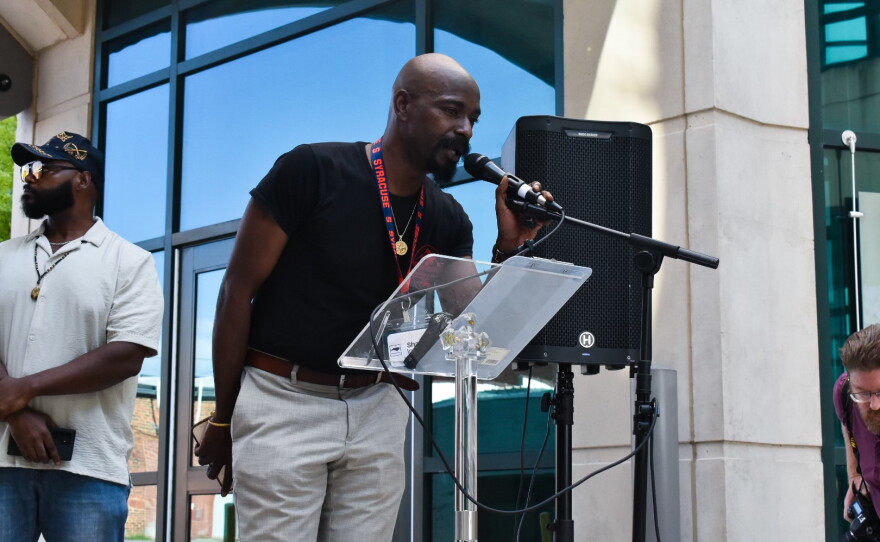
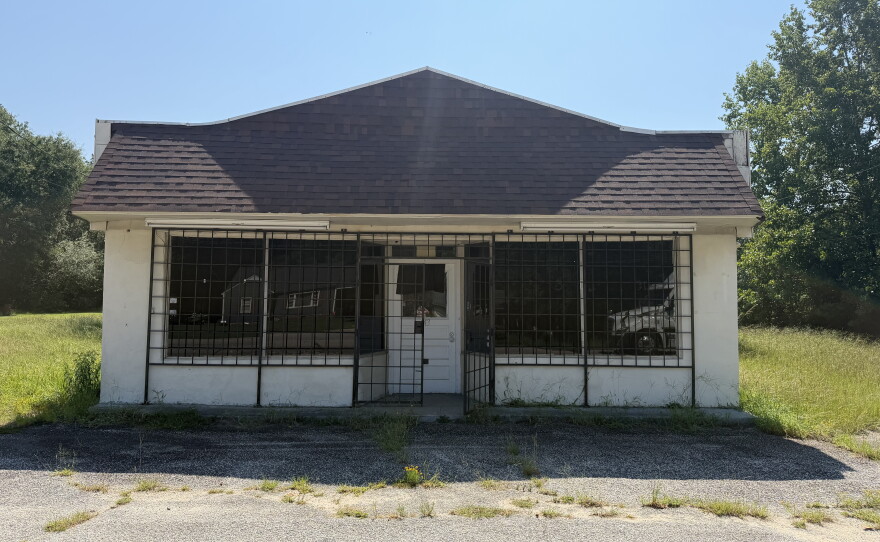
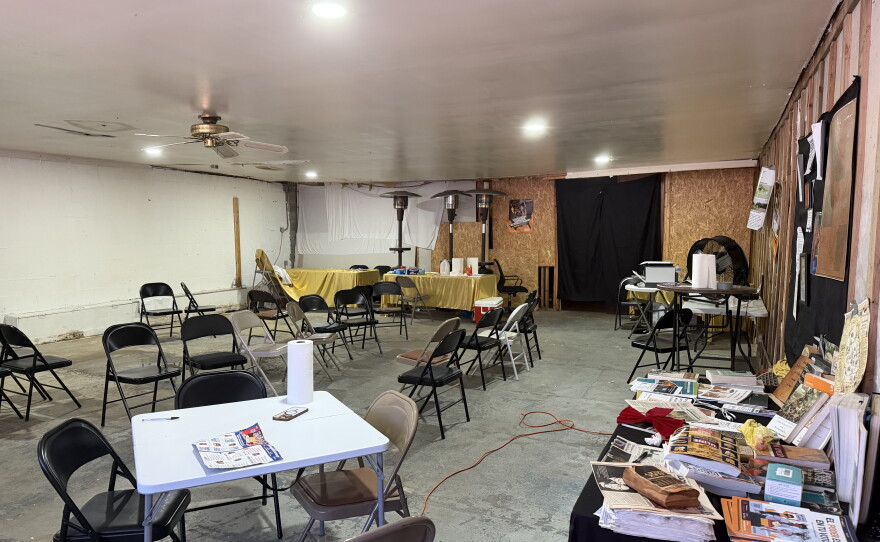
Shaun Ingram keeps his black aviator sunglasses on as he sits inside a local community center. Metal chairs form a rough circle in the center of this large room where the Richmond County Coalition for Justice and Black Empowerment meets every Thursday.
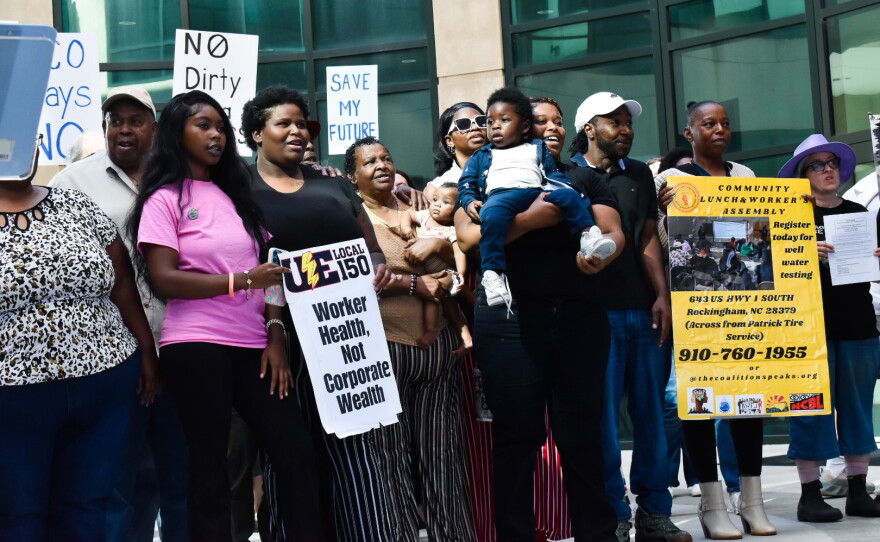
“ The Coalition came together based off Black land, the disenfranchisement of Black people in our community, (and) people not recognizing our indigenous status,” said Ingram, 42, a Richmond County native.
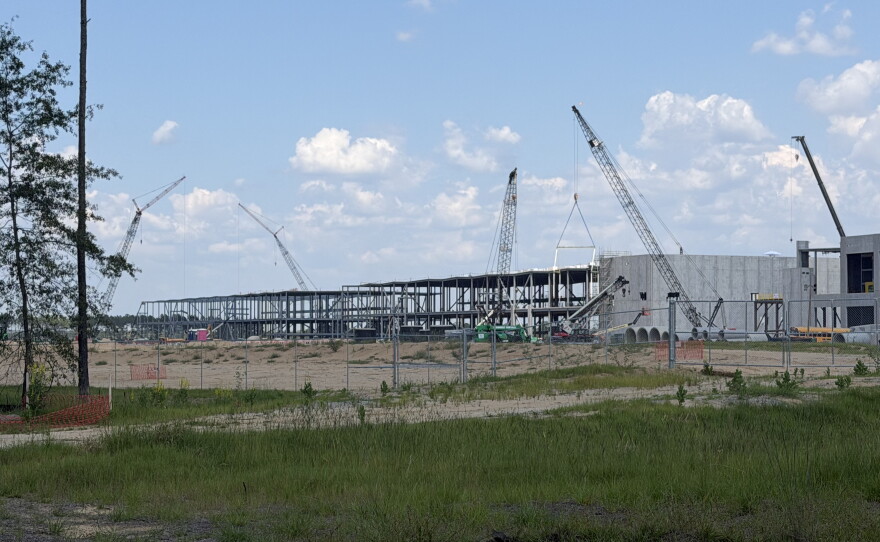
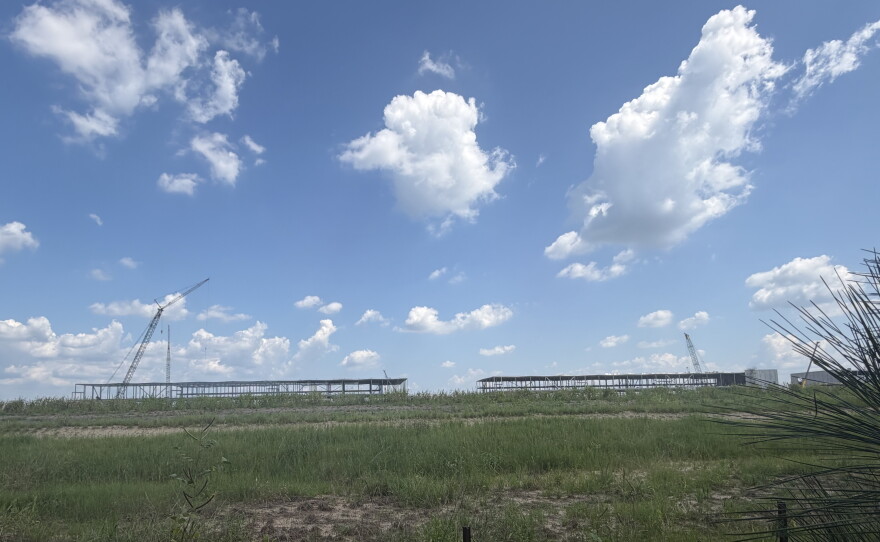
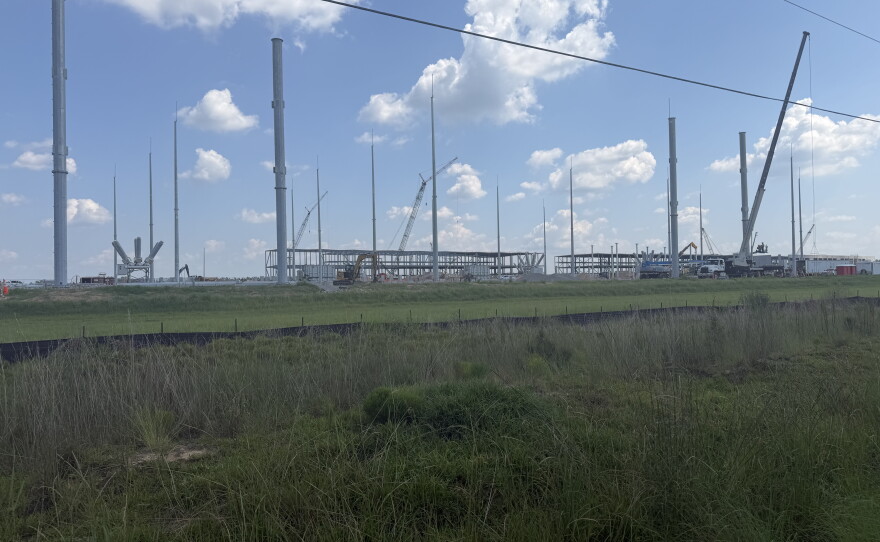
The Coalition has also been a vital source of information for community members to learn about Amazon’s $10 billion data center that’s under construction a few miles away from this meeting place.
The facility will need approximately 1 gigawatt of energy. That’s more power than the Sharron Harris nuclear plant in Wake County produces in one year.
To get the data center off the ground, Duke Energy will operate temporary, “bridge-power” generators for one year until the facility is fully connected to the grid.
State officials recently approved that air permit, along with a separate permit for Amazon to use emergency backup generators during power outages.
Combined, the permits give approval to 645 generators. Ingram said these operations are expected to increase air pollution in a community that’s already riddled with sickness.
“What happens when the air pollution is so bad where people can’t breathe and they die?” said Ingram. “Just last week, six or seven people died. Every day there’s a funeral.”
Community profile: Existing industry and illness
Reports from local and state health officials show this rural county near the South Carolina border has a higher rate of adults with heart disease than the national average. This community is also one of the top five counties in North Carolina with the highest rates of lung cancer.
When Ingram returned home after 20 years in the Navy, he soon developed a consistent cough and phlegm in his chest. He asked his doctor about it.
“We’re both retired Navy. His response to me was, ‘Well Shaun can’t you just leave? You can travel to wherever you want in the world,’” said Ingram. “But people don’t understand that my family is here. This is my home and my ancestral lands.”
Ingram and his family have indigenous roots in this area, stretching back for hundreds of years. He believes the degradation of his community is destroying people’s health.
“There are people who are carrying around asthma pumps,” said Ingram. “They’re carrying around oxygen tanks. They’re going to dialysis three or four times a week.”
These conditions are not a coincidence, contends Caroline Cress, an attorney for the Southern Environmental Law Center.
She points to existing industry in the area, including a wood pellet plant, a solid waste facility, and two natural gas plants. Last year these four facilities alone emitted almost 250 tons of fine particulate matter, or tiny soot particles that can get deep in the lungs and bloodstream.
“(Particulate matter) not only (has) respiratory effects like exacerbating asthma … they also have cardiovascular effects, and it's associated with premature death,” said Cress.
Similar to Ingram, Cress expressed frustration and disappointment at the air permitting process.
She argues it should’ve been one air permit instead of two.
“If they were permitted properly as a single major stationary source, they would be subject to a lot more stringent requirements under the Clean Air Act,” Cress said. “For example, they would have had to do a year of pre-construction air quality monitoring in the area to figure out basically what the existing pollution levels are. That's really important here because there's no air quality monitor for thirty miles. So there's no way to tell how bad the air is right now.”
North Carolina State University professor Jennifer Richmond-Bryant writes in a recent analysis how air emissions from data center operations may raise the risk of respiratory, cardiovascular and neurological health effects for residents.
“(The generators are) operating as a combined stressor,” said Richmond-Bryant. “So if you are living in that community, you're not gonna feel like, ‘Oh, now I'm feeling Amazon's particulate matter. Now I'm feeling Duke's particulate matter.’ It's all going to be combined.”
According to a community profile conducted by state environmental officials, the following conditions were highlighted as potential for concerns:
- Populations living with a disability in Richmond County are more than 110% of the state average
- Percentage of people living below the poverty rate in Richmond County is more than 20%
- Richmond County has an overall Black population more than 110% of the state average
- The population identifying as American Indian is more than 110% of the state average
- The Lumbee tribal boundary is within two miles of the Amazon data center facility
- Three churches are within one mile of the Amazon data center facility Information from Amazon Data Services, Final Community Profile, North Carolina Department of Environmental Quality
State environmental officials responded to this criticism in a press release announcing the approved air permits for Amazon and Duke.
“While both air quality permits relate to Amazon’s data center, the two permitted activities are not under the control of the same company and the two permits serve different purposes on different time horizons,” read the statement. “Amazon controls the emergency backup engines and Duke Energy controls the temporary bridge power engines before Amazon’s connection to the grid. Under normal operation, Duke Energy’s bridge power and Amazon’s backup engines will not operate concurrently.”
The press release goes on to say issuing these “permits follows Richmond County’s approval of a county incentive package to Amazon for building the data center near Hamlet.”
This project was first announced last June, with Governor Josh Stein in attendance. As Inside Climate News reports, Richmond County officials secretly worked with Amazon for months, meaning there was no real public input on the deal.
Amazon hosts open house
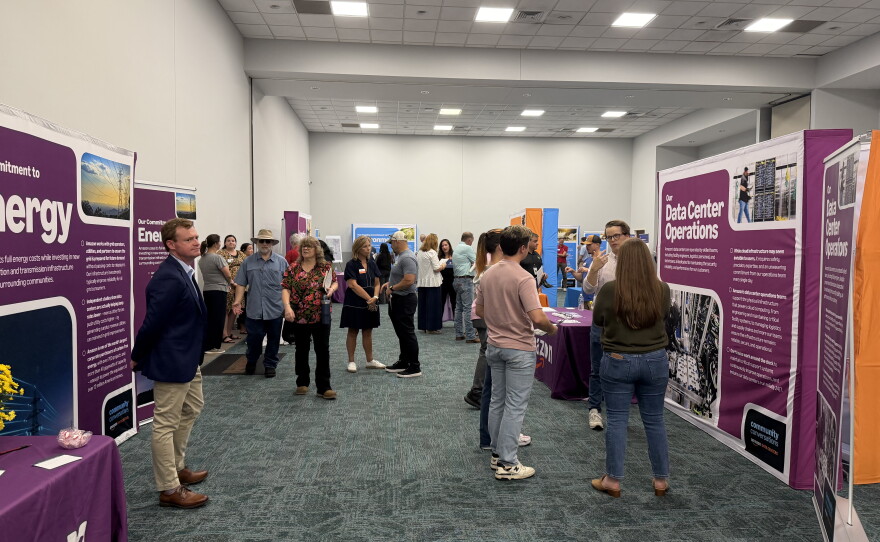
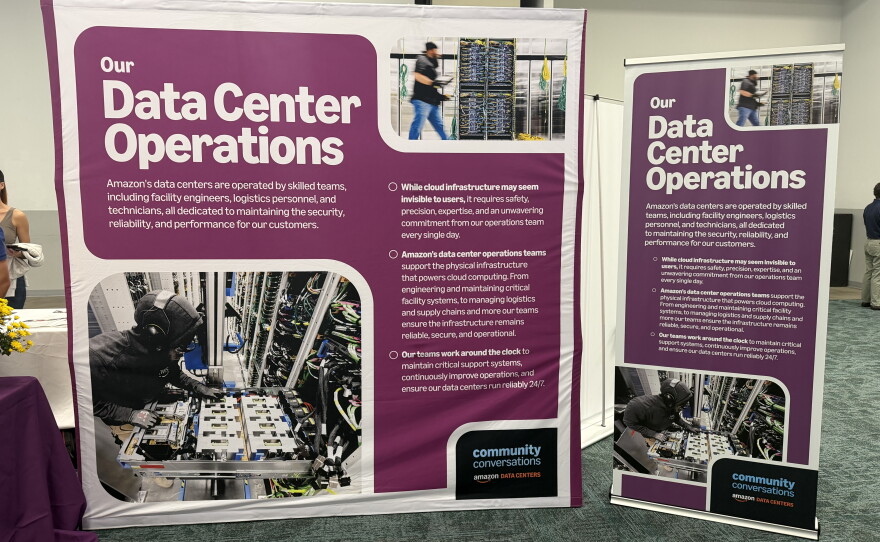
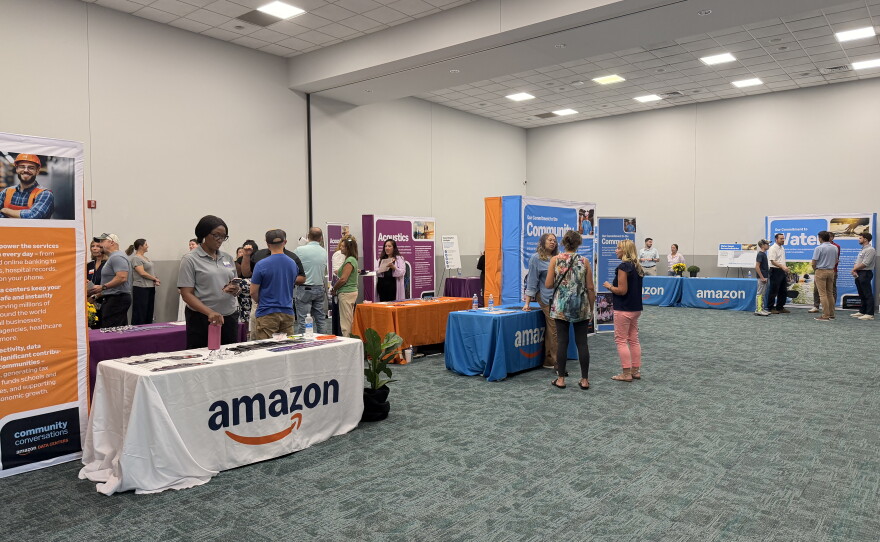
Amazon recently hosted an open house at Richmond Community College for local residents to ask questions about the data center’s sound pollution, environmental impact, and water and energy usage. The company reassured meeting attendees they're committed to building and operating data centers responsibly.
Spokesperson Roger Wehner said Amazon’s generators will only be used for emergencies and routine testing.
“Our generators will only use less than 10 hours for each one, just for testing,” said Wehner. “The same way … a hospital (or) a nursing home… has standby generation and everybody tests it."
Wehner adds Amazon wants to be a helpful community partner.
“We've been good corporate citizens with a 20-year track record,” said Wehner. “Our contributions around tax revenues, workforce development, educational investments, and philanthropic investments are bar raising.”
Amazon is committing $1.5 million to a local fire department to help buy new fire trucks and build a new fire station. The company is also partnering with the National Fish and Wildlife Foundation to restore 20-thousand acres of longleaf pine forests in the Pee Dee River Basin.
But for local organizer Ingram, who has family buried along the Pee Dee River, these actions don’t compare to the toll the data center is taking.
“It's another example of companies exploiting the community,” said Ingram.
Environmental groups could appeal the air permits in court. The data center is expected to start some operations early next year.


Saturday, Oct. 3 · American Tobacco Campus, Durham
Celebrating 50 years of community.
Our 50th Anniversary Celebration kicks off with a 5K run/walk along the American Tobacco Trail and continues throughout the day with free, family-friendly activities and meet-and-greet opportunities with your favorite WUNC reporters, program and podcast hosts.
Join the celebration