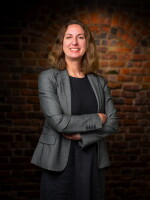
In an op-ed in the News & Observer, published on December 11, Hans said this move will build community trust and bring transparency to what students are learning at the state’s universities.
He started by writing that “we are living through an age of dangerously low trust in some of society’s most important institutions.” He then segued into the point that students would know what they’re getting into before signing up for a professor’s class.
“Those student choices should be informed by a clear understanding of the academic work being asked of them,” he wrote.
While Dr. Todd Berliner, UNCW’s chapter president of the American Association of University Professors, agrees in transparently sharing his syllabus with incoming students, he disagreed with Hans on what this policy is really about.
“This is about something else. This is part of a campaign that is occurring in several states that is designed to monitor and surveil what faculty are teaching in order to look for keywords and texts that certain people in the government don't want us teaching students,” he said.
Reporting from the Assembly traces the timeline of events that may have impacted the new policy. Last summer, the Oversight Project, connected to the conservative think tank the Heritage Foundation, asked for syllabi from 75 UNC Chapel-Hill professors, searching for the terms “diversity and inclusion,” “transgender,” and “implicit bias.” The article also noted that university systems in Florida, Georgia, Ohio, and Indiana all passed policies last year to make syllabi public.
Both the national and state chapters of AAUP called into question the timing of the UNC System's rollout, saying it was made “quickly and without much guidance” and “hasty.”
The national chapter of the American Association of University Professors released a statement on behalf of AAUP President Todd Wolfson earlier this month, specifically concerning the UNC System’s policy.
AAUP led with saying this would pose a “clear and unnecessary risk to North Carolina’s students, faculties, and communities.” They likened the coming fall public syllabus portal as a “doxxing database that will further empower those attempting to censor teaching and learning in the UNC System.”
Hans's op-ed also acknowledged that this publicly facing syllabus file would “mean hearing feedback and criticism from people who may disagree with what’s being taught or how it’s being presented,” but added that the UNC System would “do everything we can to safeguard faculty and staff who may be subject to threats or intimidation for doing their jobs.”
AAUP's Wolfson said that Hans should invest in a “robust anti-doxxing policy to protect all faculty and students from threats and intimidation.”
AAUP NC also started a petition that has over 3,000 signatures asking Hans to reverse the policy.
In terms of compliance with the newest policy, if a professor believes that a section of their syllabus would be subject to copyright restrictions, they have to submit a request to the provost for an exemption, but that’s only for syllabi from the past.
The policy doesn’t require professors to list their names or their course schedule and location on campus. They also don’t have to detail all readings, just the material that students have to purchase for class.
Professors also have to have a disclaimer that says nothing in those readings qualifies as endorsements. The guidance from AAUP NC is to add to the ‘endorsement’ line: “Course readings have been selected by faculty experts in their fields to reflect and guide students towards the current state of knowledge in their discipline.”
Berliner, along with AAUP NC, is again telling professors not to “overcomply” and to do the bare minimum in following the policy. He added that he could see a scenario in which faculty are creating two different syllabi — one for public consumption and another for the course.
He said in addition AAUP's concerns about and challenges to the new syllabus policy, they're aware of another policy from the UNC System and the UNC Board of Governors surrounding the definition of “academic freedom.”
“We have announced that there will be a legal response, but the nature of that response is right now being strategized,” he said.
“Everybody is fine with academic freedom when it conforms to their sense of what's correct or palatable, but when it offends them, they get upset, and we don't want to be in a university system where an ideological objection to something like the study of race or transgender people or climate change is considered a fireable offense,” Berliner added.
In response to questions about the new policy, UNCW issued the following statement:
UNCW is working to comply with UNC Regulation 400.1.6[R] from the UNC System. Per the guidance provided by the system, syllabi will be treated as public records as of January 15, 2026, and beginning in the 2026-27 academic year, UNCW syllabi will be housed on an online platform.
During the adjustment period, the university will provide support to all faculty members who may need it. We look forward to continued collaboration with all members of the Seahawk community as we continue to grow and adapt to changes that may arise.