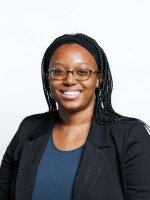
When Beth Moracco took over as UNC-Chapel Hill's faculty chair, the public university campus was seemingly returning to normal after years of navigating the COVID-19 pandemic.
As a sort of Lorax for the faculty, Moracco’s job is to communicate professor concerns with upper-level administrators like the university’s provost, chancellor, and board of trustees. It also involves spearheading multiple faculty committees, advising on campus policies, and representing the faculty at university events.
Moracco’s three-year tenure has been quite tumultuous, including a campus shooting, new chancellor, multi-day encampment protest, and several other high profile challenges. She started her term in 2023 and has been a professor at the university since 2008.
As she enters her last month as faculty chair, Moracco sat down with WUNC News reporter Brianna Atkinson to reflect on the role and how the state of higher education has changed in the past decades.
This conversation has been lightly edited for brevity and clarity.
You've been involved in some capacity at the university since the 1990s. First, as a master's and PhD student and then you joined the faculty ranks in 2008. You've been here ever since, serving in different roles. How have you seen the state of education change in that time?
I'm in public health and if you had told me 10 years ago that there would be this level of mistrust of vaccines, I would have scoffed and said, 'Oh no, this is one of our public health triumphs.' We've seen in the past two years threats to the federal funding for research, which is something that we've been very proud of. We do $1.5 billion worth of research here at Carolina, much of it funded through the NIH and other federal funders. This is groundbreaking, lifesaving research; important discoveries that we can trace back to this funding. We thought (federal funding) would be there. And as long as we rose to a level of excellence where we would be funded, that there would continue to be funding for this type of work. I think we've seen how quickly the rug can be pulled from under us and that has been sobering. That has forced us to be more nimble, to be ready to change course if we need to. We learned that during the pandemic as well.
It's not that you don't expect there to be change. I just think the pace and the abruptness of some of the changes — especially for long established norms and expectations — has been probably the biggest change that I've seen over the time that I've been here. That's not unique to Carolina, that's happening everywhere in higher education.
Do you feel like trust has been eroding on campus in recent years, has it shifted? Or on the opposite end, has it mimicked how it's been historically?
It depends on trust between and among whom you're talking about. I think that we faculty trust our students, and I think for the most part our students trust us, because we spend so much time together. We have this bond that's built on trust, and it's built on mutual respect. I don't think that has been eroded to the extent that trust between faculty and administrators has been.
I think faculty and other governing boards — I think there has been miscommunication and misunderstanding, and all of that breeds mistrust. So, I think because some of our norms of shared governance have eroded, I think that goes along with eroding trust. We've been working hard to rebuild that. It's not something you can do overnight, but I'm cautiously optimistic that we're on the right path in terms of rebuilding trust. Particularly between faculty and the administration, and our governing boards.
What worries you in the next decade or so about the state of this industry, of higher education?
I worry about threats to academic freedom. I worry that those threats will put a pall on, or there'll be a chilling effect on research ideas. Some of our greatest discoveries come across because of an idea that's a little outside of the box and it's maybe high risk, high reward. I worry that (it) feels like the general erosion of academic freedom has caused people to be more cautious of what they say in the classroom. I think that will be a huge detriment to society. I've seen more and more people retire early, decide to take a career outside of academia, or decide against an academic career — I think because of some of these fears.
If you were starting your career today, would you still get into higher education knowing everything that you know now?
It is hard to imagine anything as fulfilling as being a professor. It's that moment when you see an idea connect with a student, and figuratively the light bulb goes off. Or when you're in the hallway talking to a colleague and you have an idea that blends with an idea that they have, and you're able to build something bigger. There's just an energy on campus with this idea of the production of knowledge and the pursuit of knowledge and truth and discovery that I can't imagine replicating anywhere else. So, I'm in the right place for me and if I had to do it over again, I would.
How has your job or the role of a professor shifted over the past two decades?
The expectations and the amount of work outside of the classroom and research has just exponentially increased. Just the number of publications that you are expected to produce, the amount of hours that you teach, the amount of outside service — it goes well, well, well beyond 40 hours a week. We always do that and it always has been that way, but it has gotten to a point where it is really difficult to sustain. And I worry that it's going to become unsustainable.
It's been a gradual increase, so I can't (say) when was the inflection point, but I can't think of an evening or weekend that I haven't worked. There's that much that you need to get done. I know that there's a stereotype of professors come in and they give a lecture, then they walk off and then they pontificate – but we're working all the time just to keep up.
How are students different now than when you started?
I think about that a lot, because it does feel like students are different than when I first started. I think part of it is, at least in graduate programs, we're seeing students who are younger than they were when I was in the master's and doctoral program. So, they have less work and life experience coming into graduate school. I've read, and it reflects what I've noticed as well, is that students are experiencing what feels to be more stress and mental health issues than in the past. There is a lot of uncertainty in the world right now, there has been for quite a while. For many (students), it might be the first time that they're living away from home or in a new state, and it's a new learning environment and the expectations are higher. Coupled with uncertainty, I think that does increase those levels of anxiety.
How has the approach to higher education changed? Like, if you had to fill in a sentence, college is a place for ____. What was it 30 years ago? What is it now?
I think that's timeless. I don't think that has changed. I think part of the reason that we are struggling with some of these conflicts that I mentioned earlier is because we see that pursuit of knowledge, discovery, and truth — which is what you do in college at a university — being threatened. I don't think that the mission has changed. I think that we're facing different types of headwinds when we're trying to pursue it.
One issue I've been seeing crop up is faculty pay. Are faculty paid less at UNC than their peers at the public ivies, and if so, why?
Yes. And that's historically been the case, but that gap is widening. I know that is something that the Chancellor and the Provost are aware of and it's difficult to retain world-class faculty if you can't pay them at least at the level of peer institutions. Love of Carolina will only take you so far in terms of retaining and recruiting faculty.
I think one thing that's concerning to me is when you couple some of the high-profile issues that we've had that have been really politicized — like the denial of tenure and perceived attacks on academic freedom — with also low pay. It's really not a good combination if we're trying to recruit and retain faculty. And that will have a direct impact on our reputation.
Do you have any colleagues that made the choice (to leave)?
In my own department, we've lost three tenured or tenure-track faculty for other positions elsewhere. In some cases, it was a position that made sense in terms of their career trajectory, and I don't know what types of retention offers were made to them. But I've seen people retire early, and we have seen some faculty depart either for careers outside of academia or other institutions. What I don't know is how much larger the exodus has been than in previous years. In my department, it seems like quite a few compared to previous years.
I was reading through your predecessor, Mimi Chapman's, farewell message to the faculty back in June of 2023. That was about a week or so before you officially stepped into the role. She mentioned handing over the reins in the midst of an unsettled campus and predicted you'd have to navigate some challenges years later. What's your sentiment about the state of campus?
In my three years as the chair of the faculty, I have served with two chancellors and three provosts; there have been many turnovers of deans. That seems to have stabilized somewhat. We have a new provost who is committed to being here for the long haul. Our chancellor now has been here for several years. I think (he) has a better sense of the landscape and the academic environment. We've done a lot of work in faculty governance to really make more concrete and document some of the norms of shared governance that were maybe just assumed or accepted before.
I think it's important not to make assumptions. Making things transparent, explicit, and mutually understood, I think, will go a long way toward more productive collaboration.
You are about a month away from leaving the role as faculty chair. Have you thought about what you're going to put in your farewell?
We have over 4,000 faculty and, I like to joke, 5,000 opinions on any one topic. I like to think that I know a lot of my colleagues and peers, but it's really just a fraction. It's grown since I've been faculty chair, and I've interacted with folks that I might not have interacted with before. And certainly, trustees and people in the Board of Governors that I wouldn't have interacted with otherwise. So that has been a really formative experience for me. I've really learned a lot about how the enterprise of public higher education works. I realize as faculty, appropriately so, we really have our faculty blinders on. We see things from our perspective in our day-to-day, but understanding where that fits in in the larger ecosystem of higher ed? I'm trying to think about how to summarize all that and thank my colleagues at the same time.
Faculty care so deeply about this institution; particularly about our students, and each other, and the work. Sometimes what might come off as complaining or being overly sensitive really comes from a place of deep caring, concern, and belief in the mission of higher education. There is a lot that we do because of the deep belief and commitment to higher education. Carolina is unique in so many ways; in the combination of rigor, accessibility, and just breadth. I felt it in just about every interaction that I had. I don't know that people see that day in and day out, especially since a lot of what we do can be isolated in our classrooms. So, I wish I could tell the story of my peers better, and I wish people had a better awareness of that.
WUNC partners with Open Campus and NC Local on higher education coverage.